Verified street-asset issue reporting — built for faster City triage.
StreetwatchTO helps City staff receive fewer, higher-quality, location-precise reports for street signs and related right-of-way assets — enabling faster dispatch, clearer prioritization, and fewer repeat visits.
- Speed
Photo + GPS tagging and standardized categories reduce back-and-forth. - Quality
Verification rules reduce duplicates and filter out low-signal noise. - Cost avoidance
Earlier detection can prevent small defects from becoming expensive emergency repairs.

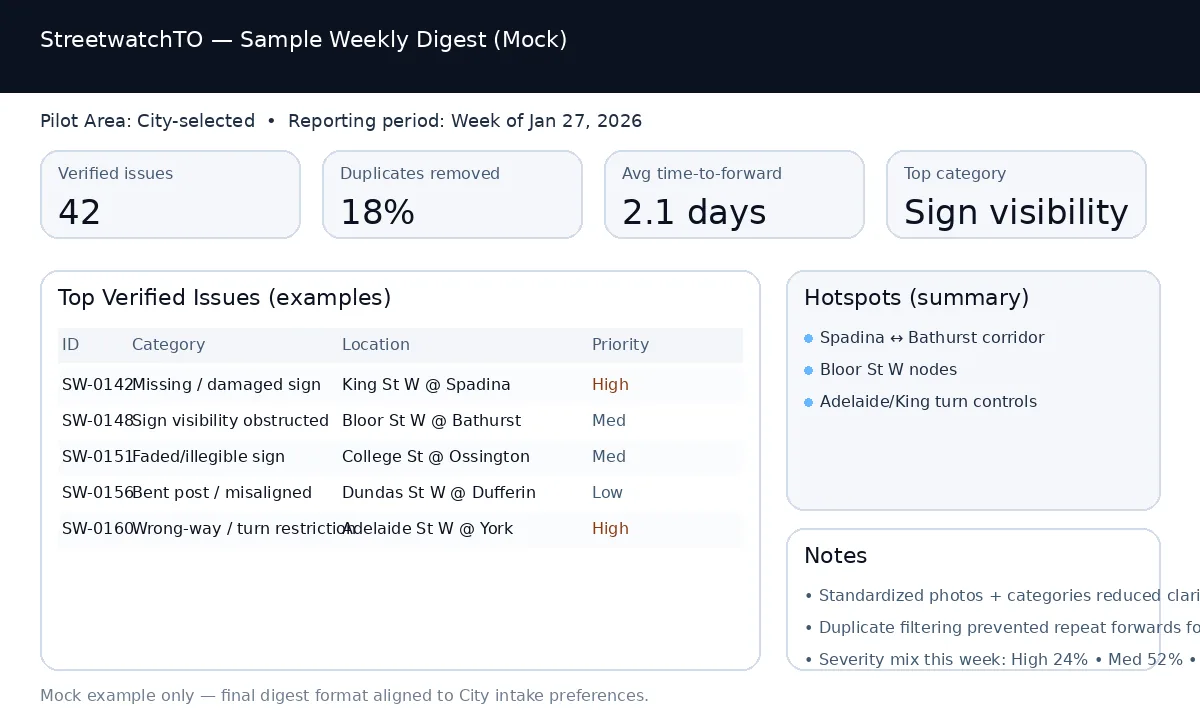
Sample output (mock digest)
Problem
Small street-asset issues (bent signs, missing plates, poor visibility) can compound — creating safety risks, resident frustration, and costly downstream maintenance.
When reporting is inconsistent or incomplete, staff spend extra time confirming locations, chasing context, or revisiting the same site.
Why now
A short, tightly-scoped pilot can prove whether verified, standardized intake improves response efficiency and asset outcomes — without requiring a major system rebuild.
Benefits to the City: clearer prioritization, reduced duplicate work orders, fewer repeat visits, and better public confidence through visible, timely fixes.
How StreetwatchTO works
Observe & report only. Each issue is captured with photo evidence and location detail, then verified and forwarded in a standardized format.
Sample output (mock digest)
Outputs & KPIs (pilot-ready)
Outputs
KPIs
Pilot at a glance
Sample output (mock digest)
Governance & risk controls
- Collect: asset photo, approximate GPS location, timestamp, category, notes.
- Avoid: faces, private interiors, unnecessary personal details (minimize by design).
- Retention: keep only what’s needed for verification and reporting; purge on a defined schedule.
- Sharing: forwarded only through the City’s preferred channel and in standardized format.
- Assumes a defined pilot area and an agreed intake channel for verified reports.
- Assumes basic categorization rules and photo quality standards (clarity, context, close-up).
- Assumes staff feedback loop for refining categories and prioritization signals.
ROI / Value
Value drivers: earlier detection (avoid emergency repair), clearer dispatch context (reduce repeat visits), and improved asset reliability through consistent reporting.
ROI ratio (mid-range, illustrative): 4:1–6:1 cost-avoidance, to be validated during the pilot.
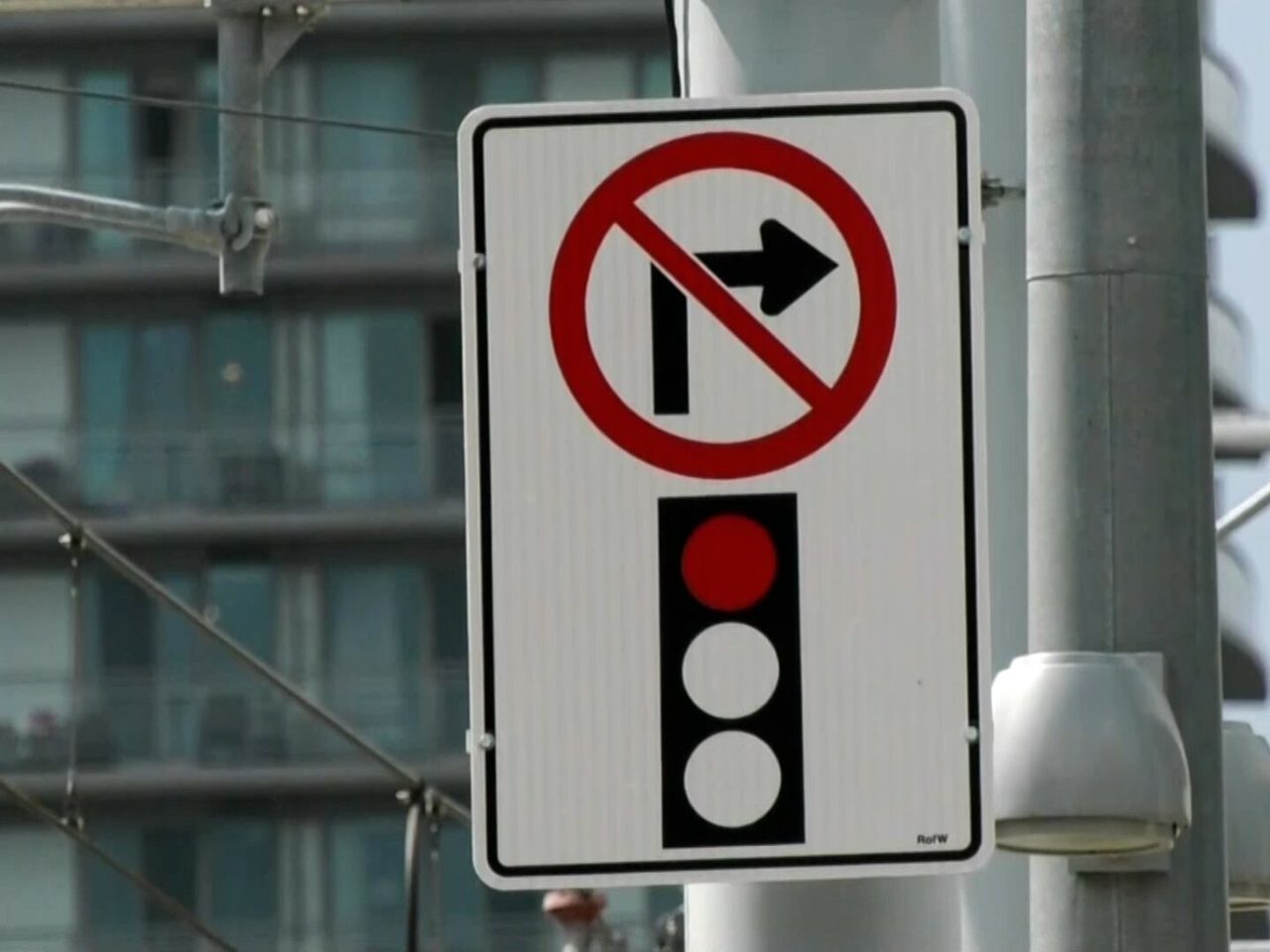
Proof / examples (issue cards)


Next step
If this aligns with current priorities, a 10-minute briefing can confirm the pilot area, intake channel, and success metrics.
Share (one click)
Quick tools for forwarding internally or pasting into an email.